Best Louvers for Seepage Walls: A Complete Guide
Seepage in walls is a common problem in many homes and commercial buildings. It not only damages the structure but also creates an unhealthy environment. One simple and effective way to manage moisture and improve airflow is by installing louvers.
In this blog, we will explain what louvers are, why they are useful for seepage walls, and which type of louvers work best.
What Are Louvers?
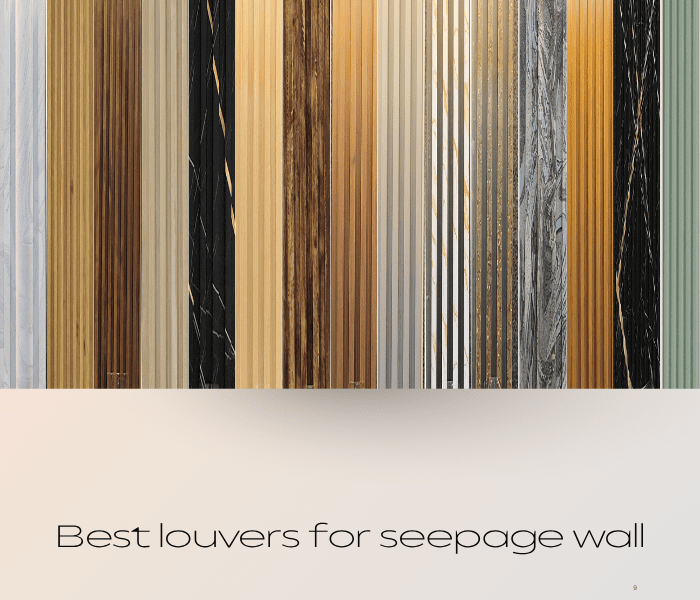
Louvers are slatted panels designed to allow air to pass through while keeping out water, dust, and debris. They are commonly used in doors, windows, and walls to improve ventilation.
When dealing with seepage walls, louvers help in reducing trapped moisture by allowing proper airflow.
Why Use Louvers for Seepage Walls?
Seepage happens when water enters or stays trapped inside walls. Without proper ventilation, the moisture stays inside and leads to:
- Damp patches
- Peeling paint
- Mold growth
- Weak wall structure
Installing louvers helps solve this problem by:
- Allowing air circulation
- Reducing moisture buildup
- Preventing mold formation
- Keeping the wall dry over time
Best Type of Louvers for Seepage Walls
Not all louvers are suitable for seepage-prone areas. Choosing the right material is important for durability and performance.
1. WPC Louvers
WPC stands for Wood Plastic Composite. These louvers are one of the best options for seepage walls.
Why WPC louvers are ideal:
- Water resistant
- Do not swell or crack
- Termite proof
- Low maintenance
- Long lasting
You can explore a wide range of WPC louvers here:
https://gargdarwajewale.com/product-category/louvers/wpc-louvers/
2. PVC Louvers
PVC louvers are another good option for damp areas.
Benefits:
- Lightweight
- Budget friendly
- Resistant to moisture
- Easy to install
However, they may not be as strong as WPC in the long run.
3. Aluminum Louvers
Aluminum louvers are strong and durable.
Advantages:
- Rust resistant
- Suitable for outdoor use
- Long life
But they can be more expensive and may not match all interior designs.
Why WPC Louvers Are the Best Choice
Among all options, louvers made from WPC stand out for seepage walls.
They combine the look of wood with the strength of plastic. This makes them perfect for areas where moisture is a constant issue.
Key reasons:
- Excellent moisture resistance
- No warping or damage due to water
- Modern and clean look
- Suitable for both indoor and outdoor use
Where Can You Install Louvers?
Louvers can be installed in multiple areas where seepage is common:
- Bathroom walls
- Basement walls
- Kitchen areas
- Exterior walls
- Utility spaces
They not only solve the problem but also improve the overall appearance.
Tips Before Installing Louvers
To get the best results, keep these points in mind:
- Fix the main seepage source first
- Choose water resistant material like WPC
- Ensure proper placement for airflow
- Hire a skilled installer
Conclusion
Seepage can damage your walls if ignored, but the right solution can make a big difference. Installing louvers is a smart and practical way to improve ventilation and reduce moisture.
Among all options, WPC louvers offer the best balance of durability, design, and performance. If you are planning to protect your walls and enhance your space, louvers are definitely worth considering.